Protecting the future of our youth means being ready for the unexpected today. Learning basic first aid and CPR equips parents, mentors, and community leaders to handle sudden medical emergencies. Discover how modern training makes it surprisingly easy to gain the skills needed to keep your community safe.
When we talk about fighting for a better future, we usually think about education, mental health, and community support. But what happens when an immediate physical crisis threatens a child’s life in a matter of seconds? Have you ever watched a kid take a bad fall on the playground or choke on a snack? Your heart drops right into your stomach.
If you are mentoring youth, coaching a local sports team, or just looking out for your own family, you need to know how to respond to an injury instantly. Signing up for CPR training near Ajax is a simple, practical step that transforms you from a helpless bystander into a capable protector. Emergencies do not care about your plans. They strike without warning, and waiting for an ambulance is not an active strategy.
Table of Contents
ToggleWhy Are First Aid Skills Crucial for Community Leaders?
Whenever you gather a group of energetic kids or teenagers, physical risks naturally follow. A friendly game of soccer can quickly result in a sprained ankle or a severe head bump. Summer charity walks expose participants to extreme heat, which can quietly trigger dehydration or a dangerous heatstroke if you miss the early warning signs.
Then there are the hidden dangers. A child might have a severe, unknown allergy to a bee sting or a hidden ingredient in a bake-sale treat. If their airway starts to swell shut, you cannot just cross your fingers and wait. Understanding how to calmly administer an EpiPen or stop a deep bleed gives you the power to control the chaos.
What Happens During Those Critical First Minutes?
Time is your absolute worst enemy during a medical crisis. When a person’s heart stops beating, they stop sending oxygen to their brain. Even the fastest, most dedicated paramedic crews have to battle through city traffic and navigate confusing park layouts to reach you.
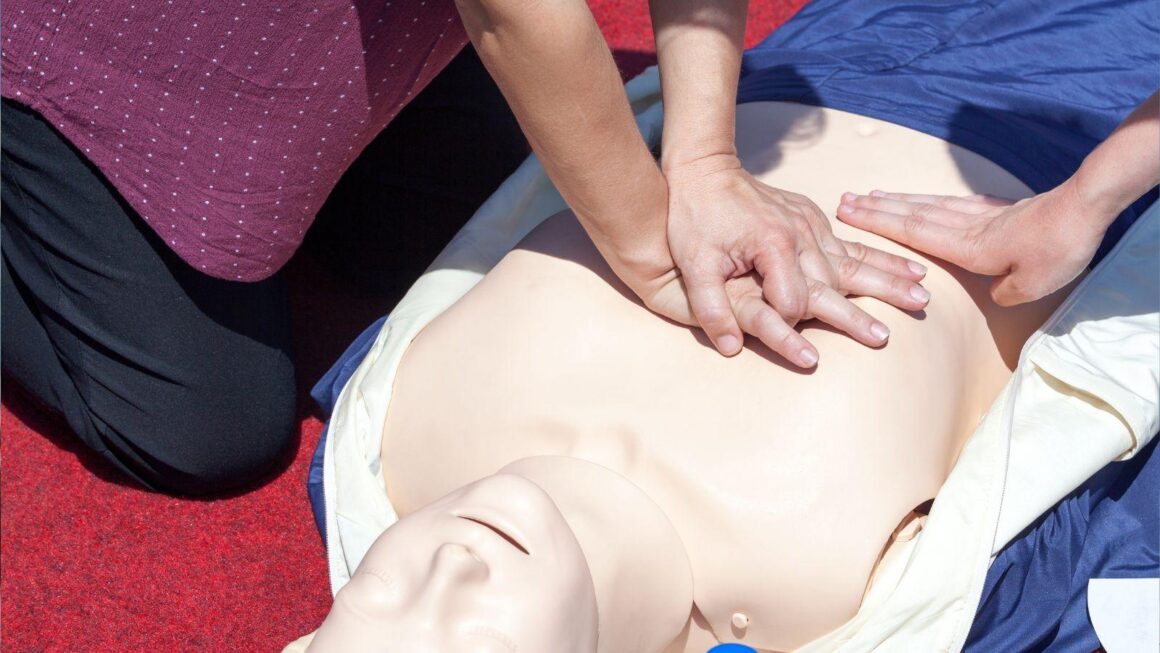
Brain damage can begin in as little as four minutes. If you just stand there waiting, those precious minutes slip away fast. By jumping in and performing proper chest compressions right away, you manually force blood and oxygen to the brain. You literally act as the victim’s heart until the professionals arrive with their advanced equipment.
How Does Blended Learning Fit a Busy Schedule?
A lot of volunteers and parents avoid taking safety classes because their schedules are already overflowing. Between work, school pickups, and community organizing, who wants to spend a beautiful weekend trapped in a stuffy classroom? I completely get it.
Thankfully, getting certified is much easier now. A Blended Learning format is a massive relief for busy people. You can knock out the theory modules online from your living room couch. Once you finish the digital reading and quizzes, you just drop by a training facility for a short, hands-on practice session. You get to practice on professional mannequins, ensuring your physical techniques are sharp and ready for the real world.
If you are looking for first aid training near Downtown Oshawa, Memorial Park, the busy intersection of Simcoe Street South and John Street West, or other areas close to our facility, then you may reach out to Coast2Coast First Aid/CPR – Oshawa in that area. For more info and articles like this visit: https://www.c2cfirstaidaquatics.com/
Frequently Asked Questions
Why is CPR for kids different than for adults? Adult CPR requires deep, two-handed chest compressions. Children and infants have much smaller, fragile frames, so you must use modified hand placement and significantly less force to avoid accidentally injuring their ribs.
What should a youth sports coach keep in their first aid kit? A great coach’s kit should include instant cold packs, varied sizes of sterile bandages, heavy-duty medical tape, antiseptic wipes, gauze pads, and a pocket mask for safe rescue breathing.
Do I need to be a medical professional to learn how to use an AED? Not at all. Modern Automated External Defibrillators are designed specifically for everyday bystanders. The machine talks to you, gives clear step-by-step instructions, and will only deliver a shock if the person actually needs one.
How long does a blended first aid course actually take? The online theory portion usually takes a few hours, but you can do it at your own pace over several days. The in-person practical skills session is much shorter than a traditional all-day class, usually wrapping up in just half a day.
How often should community volunteers renew their certification? Standard first aid and CPR certifications typically expire after three years. However, medical guidelines can update, so taking a short refresher course every single year is a smart way to keep your muscle memory sharp.