
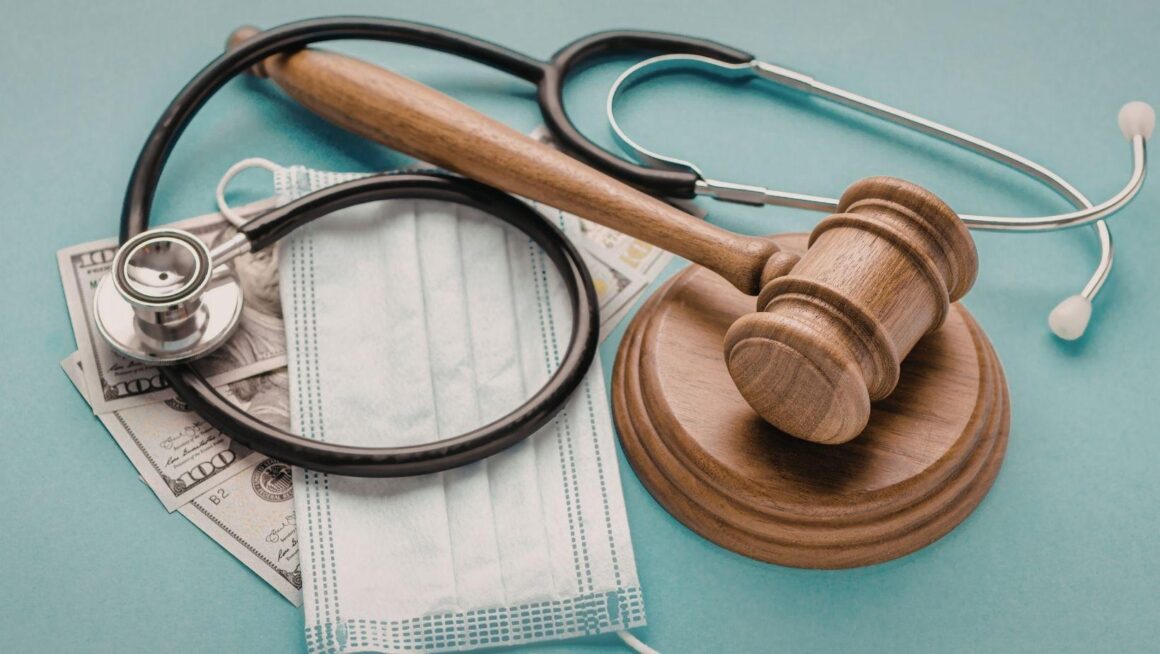
The boundaries between healthcare, law enforcement, and the legal system blur more than most people realize. A significant and growing category of professional roles operates directly at the junction of all three. These practitioners draw simultaneously on clinical knowledge, investigative methodology, and legal procedure.
This intersection matters because injuries, deaths, assaults, and complex medical circumstances frequently carry legal implications. They require specialized expertise to evaluate, document, and communicate to law enforcement and judicial bodies. Neither pure clinical training nor pure criminal justice training alone is sufficient to provide this expertise.
This article examines the primary career pathways that occupy this interdisciplinary space. It explores the distinct competencies each requires, the educational credentials that prepare practitioners, and the institutional settings where they operate.
Table of Contents
ToggleUnderstanding the Interdisciplinary Landscape
Professionals working at the intersection of healthcare, law enforcement, and the legal system are not generalists. They are specialists with rigorous, field-specific training in how medical evidence is collected, preserved, interpreted, and presented. Legal frameworks have precise evidentiary standards that shape everything they do.
These practitioners carry dual accountability that is unusual in either field. Clinicians prioritize patient care. Law enforcement officers prioritize investigation and public safety. Interdisciplinary practitioners must maintain the integrity of both simultaneously. This requirement shapes their training, documentation practices, and professional ethics in fundamental ways.
Healthcare systems, law enforcement agencies, and court systems have increasingly formalized these bridging roles. They have created credentialing pathways, professional associations, and practice standards. This reflects the maturity of these fields as distinct professional disciplines rather than informal specializations.
Forensic Nursing: Clinical Care Within a Legal Framework
Forensic nursing applies clinical nursing science to individuals whose medical circumstances intersect with the legal system. This encompasses victims of violence, perpetrators, incarcerated populations, and individuals whose cause of injury or death requires medicolegal investigation. The specialty is broader and more complex than most people understand.
The core competency distinguishing forensic nursing from standard practice is evidence collection and preservation. Forensic nurses must collect physical evidence in ways that maintain its admissibility in legal proceedings. This technical and procedural discipline requires training well beyond standard nursing education. The consequences for criminal investigations and prosecutions are direct and significant.
Forensic nurses work in emergency departments, sexual assault response centers, correctional facilities, medical examiner offices, and community-based advocacy organizations. This breadth of settings reflects the range of circumstances in which clinical care and legal process converge. The populations these practitioners serve are diverse and often deeply vulnerable.
Sexual Assault Nurse Examiners represent one of the most formally credentialed forensic nursing specializations. SANEs conduct comprehensive medical-forensic examinations of sexual assault survivors. They collect biological and physical evidence according to chain-of-custody protocols. They document injuries with clinical precision. They provide immediate medical care. They produce examination reports that may serve as primary evidence in criminal proceedings.
The SANE role requires balancing two distinct obligations simultaneously. The examination serves the immediate healthcare needs of the patient. It simultaneously serves the evidentiary needs of any subsequent legal process. Maintaining clinical priorities while applying evidence collection techniques that would withstand court scrutiny is extraordinarily difficult work.
Death Investigation and the Medical Examiner System
The medicolegal death investigation system determines cause and manner of death in cases that fall outside treating physician jurisdiction. This includes homicides, suicides, accidents, unexpected deaths, and deaths where the cause is uncertain. These determinations directly shape criminal investigations, insurance decisions, and public health surveillance. The stakes could not be higher.
Forensic pathologists are the physician-level practitioners within this system. They perform autopsies and interpret physical findings. They analyze toxicology results and provide expert testimony in legal proceedings. They apply advanced medical knowledge to determine not just what caused a death but how. This distinction carries significant legal implications in homicide investigations and wrongful death litigation.
Criminal Justice Careers at the Healthcare Interface
Criminal justice as a discipline encompasses a broad range of professional roles requiring substantive engagement with healthcare systems and medical evidence. The overlap between criminal justice training and healthcare contexts is a defining feature of several significant career pathways. Understanding this connection is essential for anyone considering work in this space.
Coursework in criminology, law, forensic science, evidence procedure, and corrections administration provides the legal and investigative framework within which medical evidence is interpreted and applied. This foundation is essential for professionals who must evaluate, act on, or communicate clinical information within law enforcement and judicial contexts.
Victim advocates working within healthcare or law enforcement settings support individuals who have experienced violence or trauma. They work through the reporting, investigation, and prosecution process. They provide crisis intervention, systems navigation, and therapeutic referrals. They ensure that victims’ rights are upheld throughout the legal process. This work requires both compassion and procedural expertise.
Forensic interviewing is a specialized discipline within victim advocacy. Forensic interviewers conduct structured, non-leading interviews with children and vulnerable adults who may be victims or witnesses in criminal investigations. They produce interview records that meet evidentiary standards while minimizing the psychological impact of repeated retelling. This skill set requires both clinical sensitivity and rigorous adherence to investigative protocol.
Correctional Health and Forensic Mental Health
Incarcerated populations have constitutionally protected rights to healthcare. The delivery of that care within correctional facilities creates a practice environment that is simultaneously clinical and legal. Healthcare providers in these settings navigate security protocols, informed consent complexities, mental health crises, and chronic disease management within an institutional context fundamentally different from community or hospital practice.
Forensic mental health practice is a distinct specialization within this space. Forensic mental health clinicians conduct competency evaluations, risk assessments, and treatment planning for individuals involved in the criminal justice system. They provide expert opinions to courts on criminal responsibility, competency to stand trial, and dangerousness. These opinions directly influence judicial decisions and legal outcomes.
Educational Pathways and Credentialing
Interdisciplinary careers at this junction typically require formal education in at least one of the primary disciplines. This might be nursing, medicine, criminal justice, psychology, or forensic science. Specialized training, certification, or advanced education in the interdisciplinary application of that foundation is then essential.
Professional associations including the International Association of Forensic Nurses, the American Academy of Forensic Sciences, and the National Organization for Victim Assistance each maintain credentialing programs. These programs define competency standards for practitioners in their respective domains. These credentials are increasingly expected by employers and courts as markers of professional authority.
Supervised practice experience is not merely educational in these fields. Because these careers operate at the interface of institutional systems with their own protocols, cultures, and legal requirements, field experience is the mechanism through which practitioners develop the procedural fluency and institutional knowledge that makes them effective. The margin for error is narrow. The consequences of mistakes are significant.
Moving Forward
Careers at the intersection of healthcare, law enforcement, and the legal system represent some of the most technically demanding and consequentially important professional roles in either field. Practitioners must be simultaneously authoritative in clinical domains and rigorous in legal ones. They must communicate across institutional cultures that have historically operated in parallel rather than in coordination.
As healthcare systems and legal institutions continue to recognize the value of specialized interdisciplinary expertise, the demand for credentialed practitioners will grow. Forensic nursing, forensic mental health, victim advocacy, and medicolegal investigation are not just meaningful careers. They are professionally sustainable for those with the preparation and commitment to enter them.